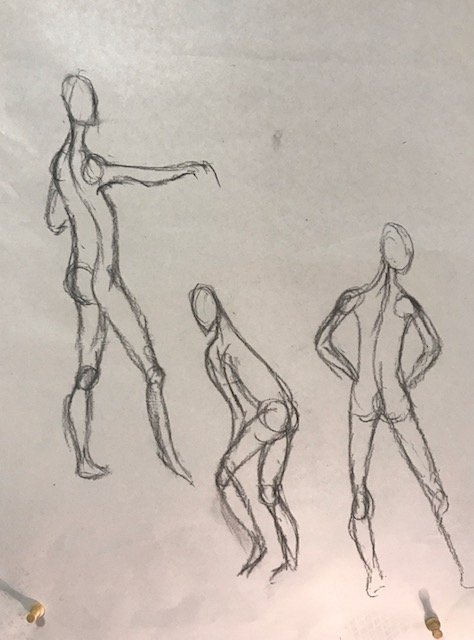
Stepping into the world of life drawing, whether you're a seasoned artist or just beginning to sketch your first lines, is a transformative experience. It’s an exercise in observation, interpretation, and expression, challenging you to truly see the human form. But what if access to physical studios or live models is limited? Enter the vibrant, growing universe of online figure drawing, offering unparalleled opportunities to hone your Life Drawing & Practice Strategies from anywhere. This guide will walk you through leveraging these digital resources to supercharge your artistic development, making every session count, even if it's from your living room.
At a Glance: What You'll Learn Here
- Why Online Drawing Thrives: Discover the practical benefits and accessibility of virtual life drawing.
- Core Concepts Demystified: Understand essential drawing principles like gesture, perspective, value, and proportion.
- Your Virtual Studio Guide: Navigate a curated list of top online life drawing classes and resources.
- Strategic Practice: Learn how to maximize your online sessions for consistent improvement.
- Overcoming Digital Hurdles: Tackle common challenges unique to online art practice.
- Continuous Growth: How to integrate ongoing learning and self-critique into your routine.
The Digital Canvas: Why Online Life Drawing Works (and Why It Matters)
For centuries, life drawing has been a cornerstone of artistic training, demanding direct observation of the human figure. Today, technology hasn't replaced this fundamental practice; it's expanded its reach. Online life drawing classes and resources have become a practical, flexible option, especially when in-person sessions aren't available or convenient.
The beauty of the digital format lies in its accessibility and sheer variety. You can draw from diverse models, explore different art styles, and participate in sessions at times that suit your schedule, often for a fraction of the cost of physical classes. It also forces a crucial focus on core observation skills. Without the direct interaction of a live model, your ability to interpret forms, lines, and tones from a screen becomes paramount, sharpening your eye in unique ways. This isn't just a convenient alternative; it's a powerful training ground for dedicated artists.
Building Your Foundations: Key Concepts for Expressive Figure Drawing
Before diving into specific online platforms, let’s revisit the fundamental principles that elevate a basic sketch to an expressive work of art. These are the building blocks you’ll continuously refine, no matter where or how you practice. Platforms like Love Live Drawing emphasize these foundational tutorials for good reason—they are universal to all figure drawing.
Gesture: Capturing Life and Motion
Gesture drawing isn't about perfect anatomy; it's about conveying the energy, flow, and life of a pose. Think of it as capturing the figure's core movement in a few rapid strokes. It's exhilarating and, with practice, will infuse your drawings with vitality. Focus on the main lines of action, the tilt of the head, the curve of the spine, and the overall rhythm of the pose. This quick, intuitive approach trains your eye to see the whole before getting lost in details.
Perspective & Depth: Making 2D Feel 3D
Creating the illusion of depth on a flat surface is magic, and perspective is your wand. While it sounds complex, understanding the basics is enough for most figure drawing. It's about convincing the viewer that your figure exists in a three-dimensional world. Practice by drawing simple box shapes, considering how they recede into space. This foundation helps you place the figure within a convincing environment and understand how limbs appear shorter or longer depending on their orientation to you.
Value & Light: Shaping Form with Shadow
Value refers to the lightness or darkness of an object, irrespective of its color. It's how light plays across a figure, creating shadows and highlights that define its form. Mastering value is crucial for making your figures look solid and volumetric, rather than flat. You'll learn about different types of shadows—form shadows that define the shape itself, and cast shadows that indicate an object blocking light—and how to effectively shade your figure to reveal its contours and muscle groups.
Proportions & Structure: Getting the Bones Right
One of the most common pitfalls for artists, especially beginners, is inaccurate proportions. The good news is that seeing and correcting these discrepancies is a skill you can absolutely develop. While detailed anatomical knowledge can come later, starting with a simplified approach to the figure's structure—focusing on major forms and their relationships—will lay a solid groundwork. Think of the head-to-body ratio, the length of the limbs, and the overall balance of the figure. Getting these relationships right early makes all the difference.
Beyond Symbols: Drawing What You Actually See
Our brains are incredible symbol-makers. When we draw a face, our brain often wants to draw a 'symbol' of a face—two eyes, a nose, a mouth—rather than the unique shapes, angles, and negative spaces of the specific face in front of us. This tendency distorts observations. A key life drawing skill is to override these preconceived symbols and truly draw what your eyes perceive, unburdened by mental shortcuts. It requires dedicated practice in objective observation.
Balance & Weight: Grounding Your Figures
A figure that looks like it's floating or about to topple over lacks conviction. Understanding balance and the figure's weight is essential for creating believable poses. Think about the 'line of gravity' that runs through the figure's center of mass, and how the body adjusts to maintain equilibrium. This concept is particularly important for capturing dynamic gestures and will help artists move beyond static, stiff drawings to create figures that feel grounded and real.
Lines that Wrap: Conveying Form, Not Just Outline
Often, beginners draw figures using outlines that describe the edge of a form, but not its volume. To make a figure feel three-dimensional, you need to think about "lines that wrap around forms." These are implied or actual contour lines that follow the curves of the body, conveying its spherical or cylindrical nature. They help define the figure's surface and make it pop off the page, giving a sense of solid mass rather than just a flat silhouette.
Your Virtual Art Studio: A Directory of Online Life Drawing Resources
The online world is brimming with incredible opportunities to engage with life drawing. Whether you're seeking guided instruction, diverse models, or simply a consistent space to practice, there's a platform for you. Here’s a rundown of popular options, updated as of February 25, 2025:
For Beginners & Core Skill Building
- Love Live Drawing: Founded by Kenzo and his mother Mayko, this platform is specifically designed to help beginners. It offers video tutorials on simplifying references, training your eye for line and tonal variations, and building a solid foundation for expressive drawing. Their focus on foundational concepts makes them an excellent starting point.
- Croquis Cafe: A fantastic resource for all levels, offering a vast collection of male and female models, including pregnant and plus-size models (like Keira Leilani). They host an annual "Figuary" event, encouraging daily figure drawing throughout February. Their extensive archives mean you'll never run out of reference material for quick studies.
Guided & Instructional Sessions
- Henley School of Art: Runs online workshops and life drawing sessions led by JoJo Harris (@buffaloboo). Previously, they offered weekly sessions across life drawing, portrait drawing, and combined portrait and life drawing. Check their current schedule for workshops that provide structured guidance.
Unguided & Classic Practice Sessions
These sessions provide models and poses without direct instruction, allowing you to focus purely on your drawing practice.
- The Renaissance Workshop (Scuola Libera Del Nudo): Offers classic, unguided live life drawing sessions. Schedule: Wednesdays (GMT 4-6pm), Fridays & Saturdays (GMT 7-9pm). Cost: £6.99. Pose structure: 7x3 mins, 4x10 mins, 2x20 mins.
- Life Drawing (Atelier 3/4): Held on Wednesdays and Saturdays (Berlin 8-10:30pm, GMT 7-9:30pm). Features both short and long poses, with a dedicated portrait session on the last Saturday of each month. Cost: 10 Euros / 7 Euros (discount may be expired).
- Brixton Life Drawing: Unguided Zoom sessions hosted by Bex and Anya, typically on one Monday each month (towards the end of the month). They operate on a "Pay what you can" model, with a suggested donation of £5-15. Tickets via Eventbrite.
Diverse Models & Inclusive Spaces
- Queer Life Drawing: Showcases LGBTQIA+ models via Zoom. Schedule: Bi-weekly (3-4:30pm GMT). Cost: £8, with a donation option. @emoryartmodel is set to take over in Spring 2025, ensuring continued inclusive representation.
- Fat Life Drawing: Bi-weekly life drawing sessions on Zoom. Monthly sessions held on the last Sunday of the month, 7pm GMT. Tickets sold via Eventbrite. This platform is dedicated to celebrating body diversity.
- Croquis Cafe: As mentioned, they include pregnant and plus-size models, actively working towards a more inclusive representation in their vast library.
Unique Offerings & On-Demand Access
- All the Young Nudes: Established in 2008 by Joanna, this platform offers session replays (via CrowdCast) and an on-demand pose subscription service. Live sessions (with a soundtrack) are £7 Earlybird, £10 Regular. Pose structure: 2-5 mins, then 10 and 20 mins. Event schedules are intermittent, so check their site regularly.
- Drawing Cabaret Couture: An online fashion gallery and independent life drawing company based in London, founded by Matthew Lawrence and Janet Mayer. Schedule: Thursdays (11am-1pm). Tickets £5 via Eventbrite. Perfect for those interested in figure drawing with a flair for fashion and costume.
Regular & Affordable Practice
- Life Figure Drawing: Organized by Judith Yaws of Asheville Drawing. Various events on Tuesdays, Saturdays, and Sundays with varying times. Poses range from 5 to 20 minutes, with sessions lasting 2 or 3 hours. Minimum donation $15, suggested $20. Tickets available via Tickettailor.com.
- Thamesmead Life Drawing: Organized by Jamie Zubairi. Schedule: Tuesdays (GMT 7-9pm), Saturdays (GMT 5-7pm). Cost: £5 for 2 hours. Pose durations from 2 to 20 minutes.
- Everybodys Life Drawing: Schedule: Tuesdays (6-7:30pm GMT). Cost: £5 per person. Poses vary from 5 to 30 minutes.
- Life Drawing Manchester: Schedule: Thursdays (GMT 7pm) for figure drawing, Sundays (GMT 6pm) for portrait drawing. Cost: £6.
- London Drawing: Schedule: Tuesdays 7:00 pm – 9:00 pm GMT, Saturdays 11:00 am – 1:00 pm GMT.
These diverse options mean you can almost always find a session that fits your schedule, artistic interest, and budget, proving that consistent practice is well within reach.
Mastering the Online Session: Practical Strategies for Improvement
Attending an online session is more than just logging in. Strategic preparation and a focused mindset will transform your casual sketches into powerful learning experiences.
Choosing Your Materials: Digital vs. Traditional
The beauty of online drawing is that it accommodates both traditional and digital mediums.
- Traditional: A simple sketchbook and a pencil, charcoal stick, or ink pen are all you need. Experiment with different papers and drawing tools to find what you love. Having a small range of values (e.g., a soft B pencil and a harder H pencil) can be incredibly helpful for practicing tone.
- Digital: A drawing tablet and software (e.g., Procreate, Photoshop, Krita) offer endless possibilities for experimenting with brushes, colors, and layers. The ability to quickly undo and refine can be a huge advantage for rapid iteration during short poses.
Whichever you choose, ensure your materials are ready before the session starts.
Warm-ups & Short Poses: The Power of the Croquis
Most online sessions, mirroring traditional ones, begin with a series of very short poses (e.g., 30 seconds to 5 minutes). These aren't about creating finished artwork; they're about loosening up, capturing gesture, and training your eye to quickly identify the essence of a pose. Don't censor yourself—just draw!
- Focus on Gesture: Use your whole arm, not just your wrist, to make sweeping lines.
- Capture the Flow: Look for the longest, most expressive line in the body.
- Limit Detail: Resist the urge to draw fingers, toes, or facial features in short poses. Focus on the main masses and their relationships.
- Experiment: Try different grips on your pencil or varying line weights.
Medium & Long Poses: Diving Deeper into Form
As poses lengthen (10, 20 minutes, or even longer), you have the opportunity to delve into more detail.
- Start with Gesture: Even in a long pose, begin with a light gesture drawing to establish the overall flow and proportion.
- Build Structure: Lightly block in the major forms (ribcage, pelvis, head) and their relationships.
- Refine Proportions: Constantly check the sizes and relationships of different body parts.
- Add Value & Form: Begin to build up the light and shadow, defining the planes and curves of the body.
- Look for Negative Space: The shapes around the figure can be just as informative as the figure itself for getting accurate proportions and angles.
Setting Up Your Space: Ergonomics and Focus
Your physical environment can significantly impact your online drawing experience.
- Good Lighting: Ensure your drawing surface is well-lit, especially if you're working traditionally.
- Ergonomics: Sit comfortably. Adjust your screen height to eye level to prevent neck strain.
- Minimize Distractions: Close unnecessary tabs, silence notifications, and let others in your household know you're busy. Create a dedicated "studio" mindset.
- Stable Internet: Crucial for a smooth, uninterrupted session. Nothing is more frustrating than a frozen model!
The Mindset of a Learner: Embracing "Failed" Drawings
One of the hardest lessons in art is letting go of the need for every drawing to be a masterpiece. The learning truly happens in the "failed" attempts. Embrace the process, not just the product. Each awkward line, each distorted proportion, is a piece of data telling you what to adjust next time. Your goal is improvement, not perfection.
Common Obstacles & How to Overcome Them
Even with the best intentions, online life drawing can present unique challenges. Anticipating these can help you navigate them effectively.
"My Drawings Don't Look Right": The Symbol-Drawing Trap
As discussed earlier, our brains love shortcuts. If your figures consistently look stiff or generic, you might be drawing symbols of body parts rather than observing their unique contours and forms in that specific pose.
- Solution: Practice "negative space" drawing—focus on the shapes around the figure. Try "blind contour" drawing, where you draw without looking at your paper, solely focusing on the model's outline. Both force your eye to observe precisely what's there, overriding preconceived notions.
Sticking to a Routine: Motivation and Consistency
It's easy to sign up for an online class, but much harder to consistently show up.
- Solution: Schedule your sessions like important appointments. Join a recurring class (e.g., Thamesmead Life Drawing or London Drawing) rather than just dropping in. Find an art buddy to attend with you for accountability. Remind yourself that even 30 minutes of focused practice is better than none.
Avoiding Overwhelm: Focus on One Concept at a Time
With so much to learn (gesture, anatomy, value, perspective!), it's easy to feel overwhelmed and try to tackle everything at once, leading to scattered results.
- Solution: Dedicate specific sessions or even specific poses within a session to focus on one particular concept. For example, during short poses, commit to only focusing on gesture. In longer poses, maybe you'll concentrate solely on value. This targeted practice will yield more measurable improvement over time.
Lack of Feedback: Self-Critique Strategies & Online Communities
One downside of unguided online sessions is the lack of direct, personalized feedback.
- Solution: Develop strong self-critique skills. Compare your drawing to the model—where are the discrepancies in proportion, angle, or value? What could be improved? Take photos of your work and post them in online art communities or social media groups (many of the listed providers have active communities) to get constructive feedback. Be open to criticism, viewing it as a tool for growth.
Beyond the Session: Your Journey to Artistic Growth
Life drawing isn't just about the time you spend with a model; it's a continuous journey of learning and observation. The skills you develop will spill over into all aspects of your art, making you a more confident and expressive artist.
- Review Your Work: After a session, take time to look at your drawings, especially your favorites and those that challenged you. What went well? What could you improve? Make notes.
- Study Anatomy and Art History: Supplement your drawing practice with theoretical knowledge. Understanding basic human anatomy (even a simplified approach for beginners) can dramatically improve your structural accuracy. Looking at how master artists tackled the figure can inspire and inform your own work. For a deeper dive into the nuances of human anatomy and form, consider delving into a comprehensive figure drawing guide that can provide structured learning paths beyond the live sessions.
- Integrate Practice into Daily Life: The principles of observation honed in life drawing can be applied everywhere. Sketch people on the train, draw your hand while watching TV, or capture the gesture of a pet. Every observation is a form of practice.
Your Next Brushstroke: Embracing the Digital Renaissance of Art Practice
The landscape of art education is ever-evolving, and online life drawing is a testament to the enduring human desire to create and interpret. By combining the wealth of digital resources with a strategic approach to practice, you can transform your artistic journey. These platforms offer not just models, but a gateway to a global community of artists, diverse perspectives, and endless opportunities to develop your unique vision. So, set up your space, choose your tools, and commit to the practice. Your best drawings are waiting to be made.