Ever wonder how the old masters rendered the human form with such captivating realism, dynamism, and emotional weight? It wasn't magic, nor was it merely copying what they saw. It was a profound understanding of what lay beneath the skin—the intricate architecture of bones, muscles, and connective tissues. Mastering Anatomy for Artists isn't about memorizing every Latin term; it's about developing an X-ray vision, allowing you to build figures that feel solid, alive, and expressive, even from imagination. This guide will walk you through the why, what, and how of artistic anatomy, transforming your approach to the human body.
At a Glance: Key Takeaways for the Aspiring Anatomist
- Beyond Surface Copying: True mastery of the human figure comes from understanding its underlying structure—the skeleton and musculature.
- The Skeleton is Your Blueprint: Learn the major bony landmarks that dictate surface form and proportion.
- Muscles Are the Movers: Understand how muscle groups attach, contract, and create the body's contours and movements.
- Skin and Fat Are the Final Touch: These layers refine and soften the underlying anatomy, adding individual character.
- Learn Actively: Passive observation isn't enough; engage with the material through drawing, sculpting, and direct application.
- Resources Abound: From structured online courses like Scott Eaton's to comprehensive visual guides like the 3dtotal.com book, choose a learning path that suits you.
- Practice Consistently: Artistic anatomy is a journey, not a destination. Regular, informed practice is key.
Why Artistic Anatomy Isn't Just for Medical School
Many artists, when faced with the complexity of human anatomy, might feel daunted, or even question its necessity. "Can't I just draw what I see?" they might ask. While observational drawing is undeniably crucial, relying solely on surface appearances often leads to figures that look flat, stiff, or subtly "wrong." The challenge is that the body is a dynamic, three-dimensional machine, and its surface is merely the outermost layer.
Think of it this way: a car mechanic knows how an engine works, not just what it looks like from the outside. That knowledge allows them to diagnose issues, predict performance, and even build an engine from scratch. Similarly, Anatomy for Artists gives you the mechanic's understanding of the human body. You learn to see beyond the skin, perceiving the skeletal framework that provides support, the muscles that drive movement, and how these elements interact to create the visible form.
This deeper understanding isn't just about rendering realism; it empowers you to:
- Draw with Confidence: You'll build figures from the inside out, ensuring structural integrity.
- Convey Weight and Balance: Understand how the skeleton and muscle mass distribute gravity.
- Capture Dynamic Movement: Predict how forms change in motion, making your figures feel alive.
- Invent and Imagine: Create compelling figures and poses from your mind, rather than being wholly reliant on references.
- Express Emotion: Grasp how facial muscles communicate feeling, and how body language reflects inner states.
This isn't about becoming a doctor, but about becoming a more powerful storyteller with the human form.
The Foundation: Your Skeleton, Your Blueprint
Every figure you draw or sculpt begins with the skeleton. It's the immovable armature that dictates proportion, defines major landmarks, and fundamentally structures the entire body. Without a grasp of the skeleton, muscles would appear to float aimlessly, and poses would lack conviction.
You don't need to memorize every single bone, but focusing on the major bony landmarks is transformative. These are the points where bones are close to the surface, creating bumps and ridges that you can feel on your own body and see on others. These landmarks serve as crucial anchors for attaching muscles and as navigational points for measuring proportions.
Consider these essential skeletal components:
- The Skull: More than just a head shape, it's a complex structure that informs facial features and expression. Understanding its major planes helps create three-dimensional heads.
- The Rib Cage: A protective cage for vital organs, its size and tilt significantly impact the torso's overall shape and how the shoulders and pelvis relate to it.
- The Pelvis: Often described as the "bowl of the body," it's a massive, sturdy structure that supports the torso, connects to the legs, and profoundly influences the lower body's curves and shifts in weight.
- Long Bones of the Limbs: The humerus, radius, ulna (arms) and femur, tibia, fibula (legs) are crucial for establishing length, proportion, and the primary axes of movement in the limbs. Their articulations at the joints dictate range of motion.
By learning to identify these elements and their surface indicators, you begin to see the human form not as a blob, but as an incredibly organized, articulate machine.
The Movers and Shapers: Understanding Musculature
Once the skeletal framework is established, muscles are layered on top, creating the characteristic forms and contours of the human body. Muscles are the engine of movement, attaching to bones via tendons and contracting to pull on those bones, thereby creating motion.
For artists, the goal isn't just to identify every single muscle by name, but to understand:
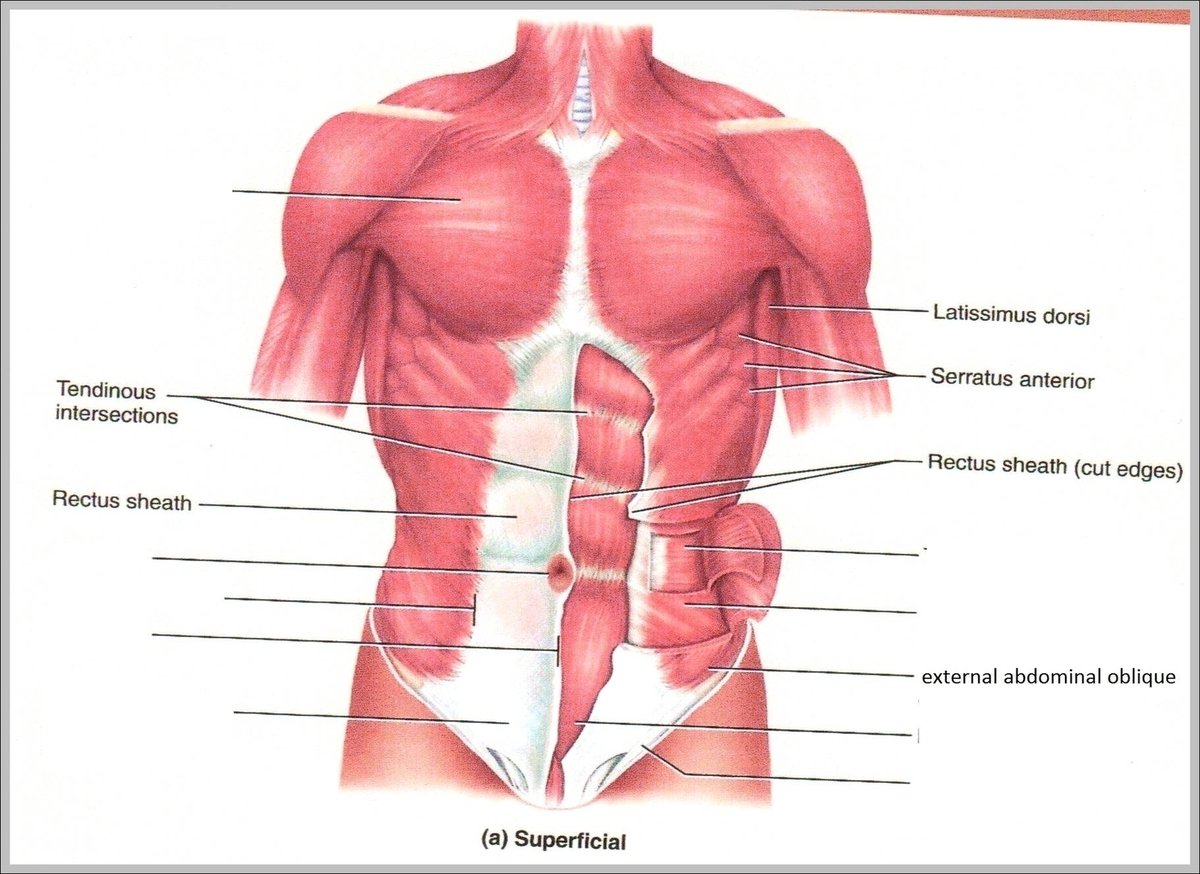
- Muscle Groups: How major muscles like the deltoids (shoulders), pectorals (chest), biceps/triceps (arms), abdominals (core), glutes (buttocks), and quadriceps/hamstrings (thighs) contribute to the overall mass and form.
- Origin and Insertion: While not strictly memorizing precise points, understanding that muscles originate at one point and insert at another is key. This dictates the direction of their pull and how they change shape when flexed or relaxed.
- Lines of Action: How muscles flow and create dynamic lines across the body, especially during movement.
- Flexion vs. Extension: How muscles bulge when contracted (flexion) and flatten or lengthen when relaxed (extension).
Imagine the deltoid, the large muscle capping the shoulder. It originates from the shoulder blade and collarbone, and inserts into the upper arm bone (humerus). When it contracts, it lifts the arm. Knowing this function helps you draw a believable, engaged shoulder in any pose.
The Finishing Layers: Tendons, Fat, and Skin
While bones and muscles form the core structure, it's the superficial layers—tendons, ligaments, fat, and skin—that provide the final, nuanced forms.
- Tendons and Ligaments: Tendons connect muscle to bone, and ligaments connect bone to bone, providing stability. While often less visible than muscles, prominent tendons (like the Achilles tendon at the heel) are key anatomical landmarks and indicate muscle attachment points.
- Fat: Subcutaneous fat sits beneath the skin, softening muscle definition, rounding out forms, and contributing significantly to individual body types and age characteristics. It's not just "extra weight"; it's an integral part of the body's aesthetic.
- Skin: The outermost layer, skin stretches, folds, and wrinkles according to the underlying forms and movements. Understanding how skin behaves, especially at joints and areas of compression/tension, adds immense credibility to your figures.
Neglecting these layers means your figures might look like anatomical diagrams rather than living, breathing people. The interplay of rigid bone, flexing muscle, and yielding fat/skin is what creates the rich visual tapestry of the human form.
Pathways to Mastery: Courses, Books, and Practice
Embarking on the journey of Anatomy for Artists can feel overwhelming, but thankfully, there are excellent resources available to guide you. Whether you prefer structured learning with direct feedback or self-paced study with comprehensive references, you'll find a path.
The Structured Deep Dive: Online Courses
For many, a structured course provides the necessary discipline and expert guidance. Scott Eaton's Anatomy for Artists Online Course is a prime example of a highly respected program that distills complex anatomical knowledge specifically for artists.
Scott Eaton's Approach: This 8-week online course draws lessons from the old masters, providing a critical anatomical foundation for figurative artists. It's rigorous enough for professionals from top studios like Industrial Light & Magic, Blizzard, and Pixar, as well as students from prestigious art schools like the Florence Academy of Art and RISD.
- Format: Weekly self-paced video lectures (2-2.5 hours), thorough reviews, video replies to student questions, and a "Gallery Abominate" where common anatomical mistakes are dissected.
- Assignments: Weekly ecorche drawing assignments involve visually dissecting works by Michelangelo, other old masters, Louvre sculptures, and photographs from Scott Eaton's own Bodies in Motion library. These exercises are suitable for all drawing skill levels, pushing you to truly understand what you're seeing.
- Feedback: Full-enrollment students get the invaluable opportunity to submit personal work for direct review and critique from Scott Eaton himself. This personalized feedback can dramatically accelerate your learning.
- Access & Commitment: The course lasts 8 weeks, with students retaining access for 6 months. Expect to commit 4-5 hours weekly (3 hours for lectures/reviews, 2 hours for assignments).
- Resources: All students receive six months of full access to Scott's Bodies In Motion reference library – an exceptional resource for pose reference.
Enrollment Options: You can opt for Full Enrollment ($895) to get complete access and direct feedback (spaces are limited) or Standard Enrollment ($395) for access to all course material without direct feedback. The choice often depends on your budget and how much you value personalized critique.
The Visual Encyclopedia: Reference Books
For those who prefer a self-paced, visually rich learning experience, dedicated anatomy books are indispensable. "Anatomy for Artists" by 3dtotal.com is a standout in this category, offering an extensive visual reference.
The 3dtotal.com Book: This 304-page hardback is a robust visual guide to the human form, designed for artists across all mediums—drawing, painting, sculpture, and digital art.
- Visual Richness: It features over 240 specially commissioned color photographs of the body, head, and face, providing a solid foundation for character art. The critical element here is the clarity and abundance of high-quality reference.
- Expert Overlays: Each photograph is overlaid with musculature, planar, and contour diagrams meticulously drawn by figurative artist Charlie Pickard. These overlays are a masterclass in themselves, showing you exactly how the underlying structures manifest on the surface.
- Detailed Explanations: The book includes detailed diagrams explaining the inner workings of joints and muscles and their surface impact. An introduction by expert Jahirul Amin covers anatomy fundamentals, terminology, history, joint mechanics, the skeleton, muscles, body types, proportion, symmetry, skin, fat, wrinkles, sex, and age. This comprehensive overview sets the stage effectively.
- Extensive Visual Library: The reference library covers every major body part: torso, arms, hands, legs, feet, neck, head, facial features. It also includes various body types, postures, and a collection of creative poses (classical standing, dynamic action, narrative, seated), giving you ample material to study.
- Important Note: This book contains nudity, as is common and necessary for accurate anatomical study.
This book serves as an outstanding companion for any artist, offering both detailed analysis and a vast visual library.
The Self-Starter's Path: Consistent Practice
Even with the best courses or books, consistent personal practice is non-negotiable. This is where the knowledge truly sinks in and transforms into skill.
- Ecorche Drawing: This isn't just a Scott Eaton assignment; it's a time-honored method. "Ecorche" means "flayed" or "skinned." For artists, it means drawing the skeleton and then layering muscles on top, either from imagination or using reference. It forces you to build the figure structurally.
- Drawing from Life/Photos: Continually draw the human form, consciously seeking out the bony landmarks and muscle groups you've learned. Don't just copy the outline; try to infer the underlying structure.
- Gesture Drawing with Intent: Even in quick gesture poses, try to mentally "X-ray" the figure and identify its core action and major masses. This helps you capture the essence of movement and balance.
- Sculpting: Working in 3D, whether traditionally with clay or digitally, is an excellent way to understand form and volume. Building an ecorche sculpture can solidify your understanding of anatomical relationships like nothing else.
For a broader understanding of how all these drawing methods fit together, exploring a complete guide to figure drawing can help contextualize your anatomy studies within a holistic artistic practice.
Common Pitfalls Artists Face (and How to Leap Over Them)
The path to mastering artistic anatomy isn't always smooth. Many artists stumble over similar hurdles. Knowing them in advance can save you time and frustration.
- Rote Memorization Over Understanding: The biggest trap. Simply learning muscle names and locations without grasping their function or how they affect surface form is largely useless. Focus on how a muscle moves, why it creates a certain bulge, and where its primary attachments are.
- Ignoring the Skeleton: Trying to draw muscles without first understanding the underlying bone structure is like trying to build a house without a foundation. The figure will lack solidity and believable proportion. Always start with the skeleton, even if it's just a mental sketch.
- Neglecting Fat and Skin: Reducing the body to just bones and muscles results in figures that look emaciated or overly "ripped." Real bodies have varying degrees of fat and skin that soften, modify, and add character to the underlying forms. Learn to observe and render these layers sensitively.
- Static Anatomy: Understanding anatomy for a single, frozen pose is one thing; comprehending it in dynamic movement is another. Muscles stretch, compress, and shift with action. Study figures in motion, even if it's just from the Bodies in Motion library.
- Perfectionism and Overwhelm: Anatomy is vast. Don't try to learn everything at once. Focus on one area, one muscle group, or one joint at a time. Build your knowledge incrementally. Even the greatest masters continually studied anatomy throughout their careers.
Practical Exercises to Solidify Your Knowledge
Theoretical knowledge only gets you so far. Practical application is where the magic happens. Here are some effective exercises:
- Landmark Mapping: Take photographs of models (or yourself in a mirror) and draw directly onto them, indicating the major bony landmarks (e.g., kneecap, hip bones, collarbones, elbow points) and the outlines of major muscle groups.
- Constructive Anatomy Drawing: Instead of drawing outlines, try to "build" the figure from simple geometric forms (boxes, cylinders) for the bones and then sculpt the muscle masses on top.
- Comparisons: Find two figures in different poses (e.g., arm raised vs. arm lowered) and compare how the same muscles change shape and length. This highlights dynamic anatomy.
- Muscle Origin/Insertion Studies: Pick a specific muscle (e.g., biceps) and draw it in isolation, then draw it attached to simplified bones, showing its origin and insertion points and how it pulls.
- Anatomical Redrawing: Take a master drawing or sculpture and, on a separate layer or sheet, try to draw the skeleton, then the muscles, that would create that surface form. This is a powerful analytical exercise.
Beyond the Basics: Adding Nuance to Your Figures
Once you've grasped the fundamentals, you can begin to delve into the nuances that truly elevate your artistic anatomy.
- Proportion and Canon: Explore historical canons of proportion (e.g., Vitruvian Man, various academic canons) and understand how they can serve as a starting point, even as you learn to observe and depict individual variation.
- Body Types and Individual Variation: Not everyone is an idealized athletic figure. Learn how somatotypes (ectomorph, mesomorph, endomorph) manifest anatomically, and how age, sex, and genetics contribute to unique forms.
- Age and Sex Differences: Understand the subtle yet significant anatomical differences between sexes (e.g., pelvic width, shoulder breadth, fat distribution) and how the body changes from childhood through old age (e.g., bone density, muscle atrophy, skin elasticity).
- Expression and Emotion: Facial anatomy is a complex sub-field. Learning the major muscles of the face allows you to sculpt believable expressions, from subtle smiles to intense grimaces, giving your characters true emotional depth.
Choosing Your Best Path Forward
Deciding between a structured course, a reference book, or a purely self-directed approach depends on several factors:
- Learning Style: Do you thrive with direct instruction and deadlines, or do you prefer to absorb information at your own pace?
- Budget: Courses can be a significant investment, while books offer excellent value for comprehensive reference.
- Need for Feedback: If you struggle to self-correct or want personalized guidance, a course with feedback (like Scott Eaton's Full Enrollment) is invaluable.
- Depth of Engagement: A course often forces a deeper, more active engagement with the material through assignments and critiques. A book is excellent for repeated reference and visual study.
Many artists find success by combining resources: using a comprehensive book as a constant reference alongside a structured course for foundational learning, or embarking on an intensive self-study plan augmented by a library of high-quality visual references.
Your Next Steps in Mastering Artistic Anatomy
The journey into Anatomy for Artists is a continuous and rewarding one. It will fundamentally change how you see and draw the human body, unlocking new levels of realism, expression, and creative freedom.
- Assess Your Current Knowledge: Where are your biggest gaps? Is it skeletal structure, specific muscle groups, or understanding how everything moves?
- Pick Your Primary Resource: Whether it's enrolling in Scott Eaton's course, investing in the 3dtotal.com book, or curating your own set of online tutorials and references, commit to a primary learning tool.
- Start Small, Stay Consistent: Don't try to learn the entire body in a week. Focus on one section (e.g., the torso, then the arms). Dedicate consistent time each week, even if it's just 30 minutes of focused study and drawing.
- Draw, Draw, Draw: Apply what you learn immediately. Draw from life, draw from photos, draw from imagination. The act of putting pencil to paper is the most powerful teacher.
- Observe the World Around You: Once you start learning anatomy, you'll begin to see it everywhere. Observe people's postures, movements, and expressions in daily life. This is your personal, ongoing anatomical reference library.
Mastering artistic anatomy isn't about achieving perfection overnight; it's about building a robust understanding and continually refining your eye. Embrace the challenge, enjoy the process of discovery, and watch your figures come to life with newfound power and authenticity.